The Industrial Revolution and Maritime Transportation
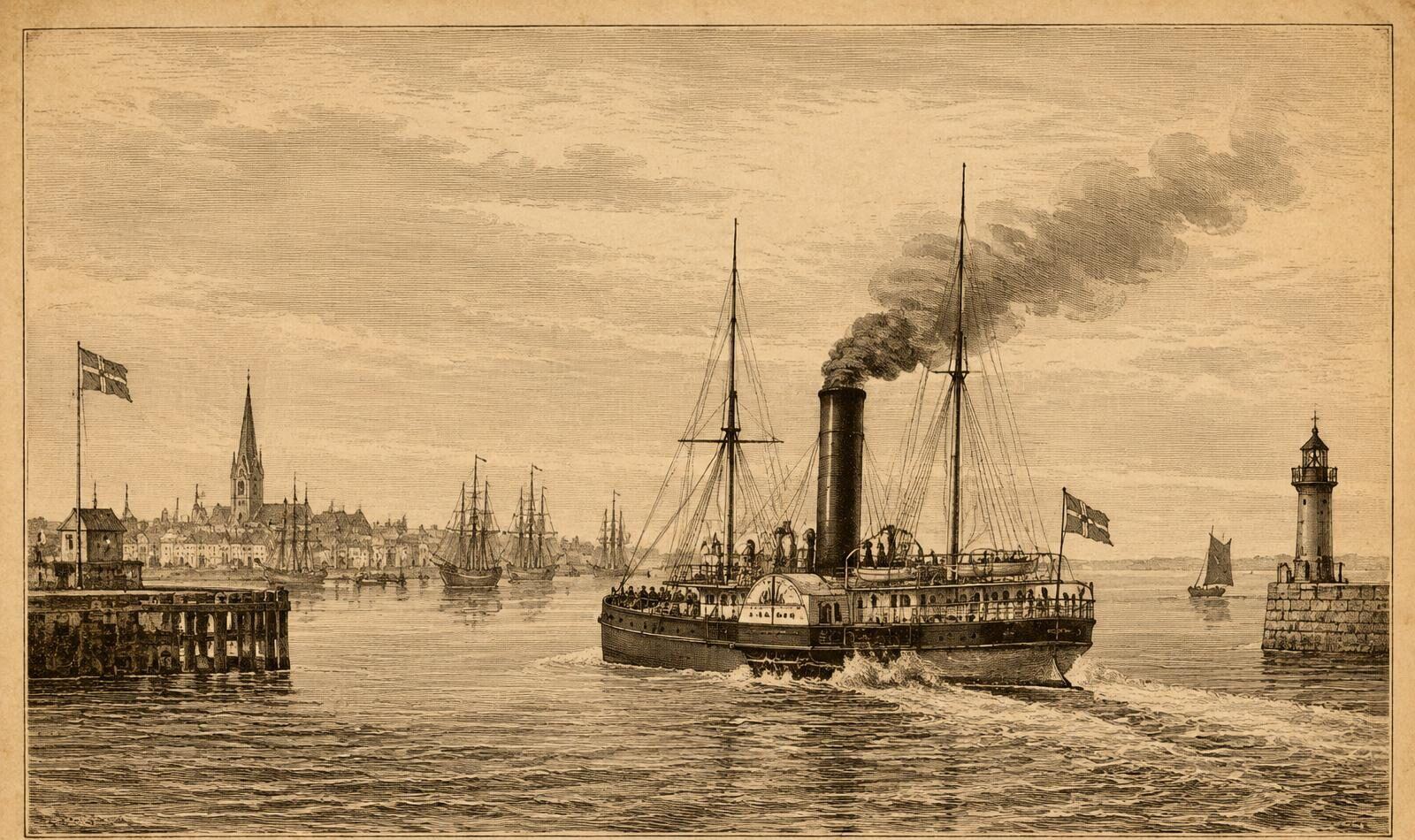
The steam engine changed what a ship could promise. A sailing vessel could only estimate its arrival; a steamship could keep a timetable. In the 1810s, steam navigation spread from Britain to continental waters, and Denmark was among the early adopters. The paddle steamer Caledonia, brought from Scotland, began service between Copenhagen and Kiel in 1819, connecting the Danish capital with the Holstein coast.
The Development of Steam Ferries
Early steamers were small wooden paddle ships with limited range. Over the nineteenth century, iron and then steel hulls, screw propellers and more efficient compound engines made vessels larger, faster and more reliable. Ice-strengthened hulls helped maintain winter service, an important consideration in the Danish straits.
The Expansion of European Railways
Railways spread rapidly across Germany and Denmark from the mid-nineteenth century. Denmark's first railway, Copenhagen–Roskilde, opened in 1847. In northern Germany, lines reached the Baltic ports, and the idea of a direct Berlin–Copenhagen rail connection became increasingly attractive. The obstacle was obvious: the sea.
Why Railway Ferries Were Needed
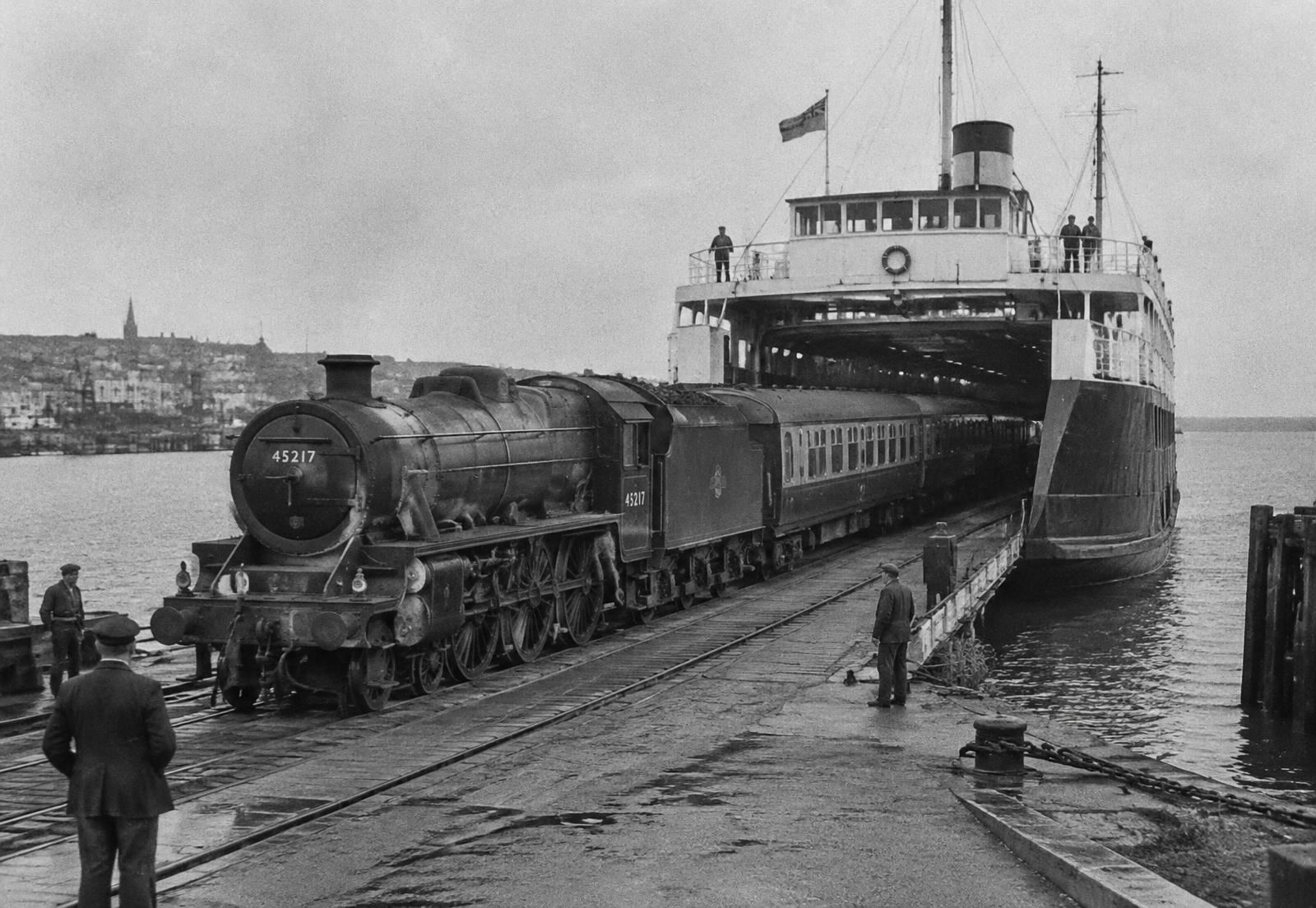
Transferring passengers, luggage and freight from train to ship and back again was slow and costly. Each transfer meant handling, delay and risk of damage. Carrying the railway wagons themselves across the water solved the problem: freight could stay sealed, and passengers could remain in through carriages or sleeping cars.
Railway Ferry Technology
- Ferry ramps: hinged linkspans compensated for differences between quay height and deck height.
- Railway tracks on vessels: decks carried parallel tracks that aligned precisely with those on shore.
- Port infrastructure: dedicated ferry berths with guiding piers allowed ships to dock bow- or stern-first.
- Loading systems: wagons were shunted aboard in groups, balancing the load to keep the vessel level.
- Safety considerations: wagons were braked, clamped and chained to resist the motion of the sea.
Germany–Denmark Railway Connections
The first direct rail-and-ferry link between Germany and Denmark across the Baltic opened in 1903 between Warnemünde, near Rostock, and Gedser on Falster. It allowed through trains between Berlin and Copenhagen. After the Second World War, with Warnemünde now in the Soviet occupation zone, a western alternative was opened in 1951 between Großenbrode in Holstein and Gedser. In 1963 the Großenbrode route was replaced by the new Puttgarden–Rødby crossing.
The Growth of Passenger Transportation
Industrialisation raised incomes, expanded business travel and created modern tourism. International express trains and sleeping cars made Copenhagen and Berlin a single overnight journey apart. Ferry crossings became part of a continuous itinerary rather than a separate adventure.
The Arrival of Automobile Ferries
After the Second World War, private car ownership grew quickly in both countries. Ferries were redesigned with vehicle decks and drive-on ramps, often alongside rail tracks. The germany denmark car ferry became a central part of holiday travel to Scandinavia.
The Development of Modern Ferry Terminals
Simple quays evolved into dedicated terminals with check-in booths, lanes for cars and lorries, passenger buildings and direct motorway access. Puttgarden and Rødby were planned from the start as combined rail and road terminals.
Historical Technology Timeline
1819
Caledonia
Steamship service begins between Copenhagen and Kiel.
1847
First Danish railway
Copenhagen–Roskilde line opens.
1903
Warnemünde–Gedser
Railway ferry links Berlin and Copenhagen.
1951
Großenbrode–Gedser
Post-war western rail and car ferry route opens.
1963
Puttgarden–Rødby
Combined rail and car ferry opens with the Vogelfluglinie.