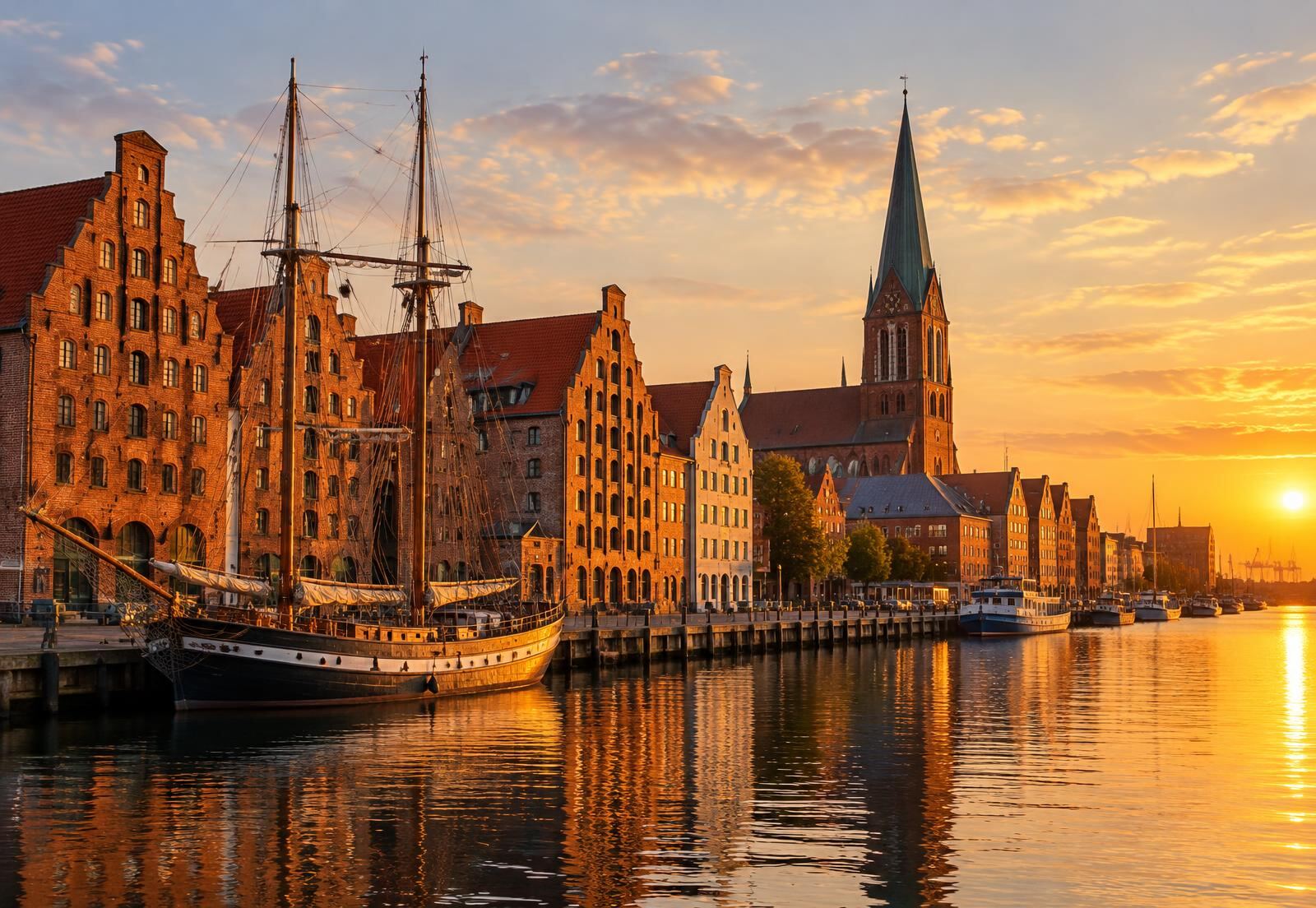
Rostock's Maritime Heritage
Rostock on the Warnow river was a member of the Hanseatic League and a major Baltic trading city in the Middle Ages. Its university, founded in 1419, is one of the oldest in northern Europe. The town of Warnemünde at the mouth of the Warnow served as its outer port and later became a seaside resort.
Gedser and Southern Denmark
Gedser lies at the southern tip of Falster, the southernmost point of Denmark's islands. It became important because it is the closest Danish port to the Mecklenburg coast. A railway line connected Gedser northwards through Falster towards Zealand and Copenhagen.
Early Maritime Connections
Shipping between Mecklenburg and the Danish islands is as old as Baltic trade itself, but the first organised, documented transport link of lasting significance was the railway ferry introduced at the beginning of the twentieth century.
The Development of Ferry Services
In 1903 a railway ferry service opened between Warnemünde and Gedser. It was operated by the Mecklenburg state railway and Danish State Railways (DSB), and allowed trains to travel from Berlin to Copenhagen with the sea crossing integrated into the journey.
Railway and Passenger Transport
Through carriages and night trains made the route a classic part of European rail travel. Passengers could leave Berlin and arrive in Copenhagen without changing trains — an extraordinary convenience at the time. Learn more about this technology in From Steamships to Railway Ferries.
The Impact of European Political Changes
The route was disrupted during both world wars. After 1945, Warnemünde lay in the Soviet occupation zone and from 1949 in the German Democratic Republic. Western traffic shifted to Großenbrode–Gedser and, from 1963, to Puttgarden–Rødby. The Warnemünde–Gedser connection nevertheless continued, becoming one of the GDR's links to Scandinavia. German reunification in 1990 restored the route's role as a natural connection between Berlin and Copenhagen. In the 1990s the German terminal moved from Warnemünde to Rostock's Überseehafen, creating the modern Rostock–Gedser route.
The Growth of Vehicle Transportation
As railway freight declined on the route, cars, coaches and lorries became its main traffic. The rostock gedser car ferry serves motorists travelling from Berlin and eastern Germany towards Copenhagen and Sweden, offering an alternative to the Fehmarn route.
Modern Ferry Infrastructure
The rostock ferry terminal sits within the large Überseehafen port complex, built in the GDR era, with direct motorway access. The gedser ferry terminal is compact, reflecting the town's small size. Modern vessels on the route are large vehicle ferries with hybrid-capable propulsion systems.
Historical Timeline
1419
University of Rostock
Founded, reflecting the Hanseatic city's importance.
1903
Warnemünde–Gedser rail ferry
Direct Berlin–Copenhagen rail link across the Baltic opens.
1949–1990
GDR era
The route continues as an East German connection to Denmark.
1990
Reunification
The crossing regains its role between Berlin and Copenhagen.
1990s
Move to Rostock
German terminal relocates from Warnemünde to Rostock Überseehafen.
1998
Scandlines formed
German and Danish state ferry operations merge.
The Route's Continuing Importance
Today the rostock gedser crossing is the shortest sea route between the Berlin region and Copenhagen. It remains important for tourism, freight and regional ties between Mecklenburg-Vorpommern and southern Denmark. For current departures, see the official operator links on our Modern Ferries page.