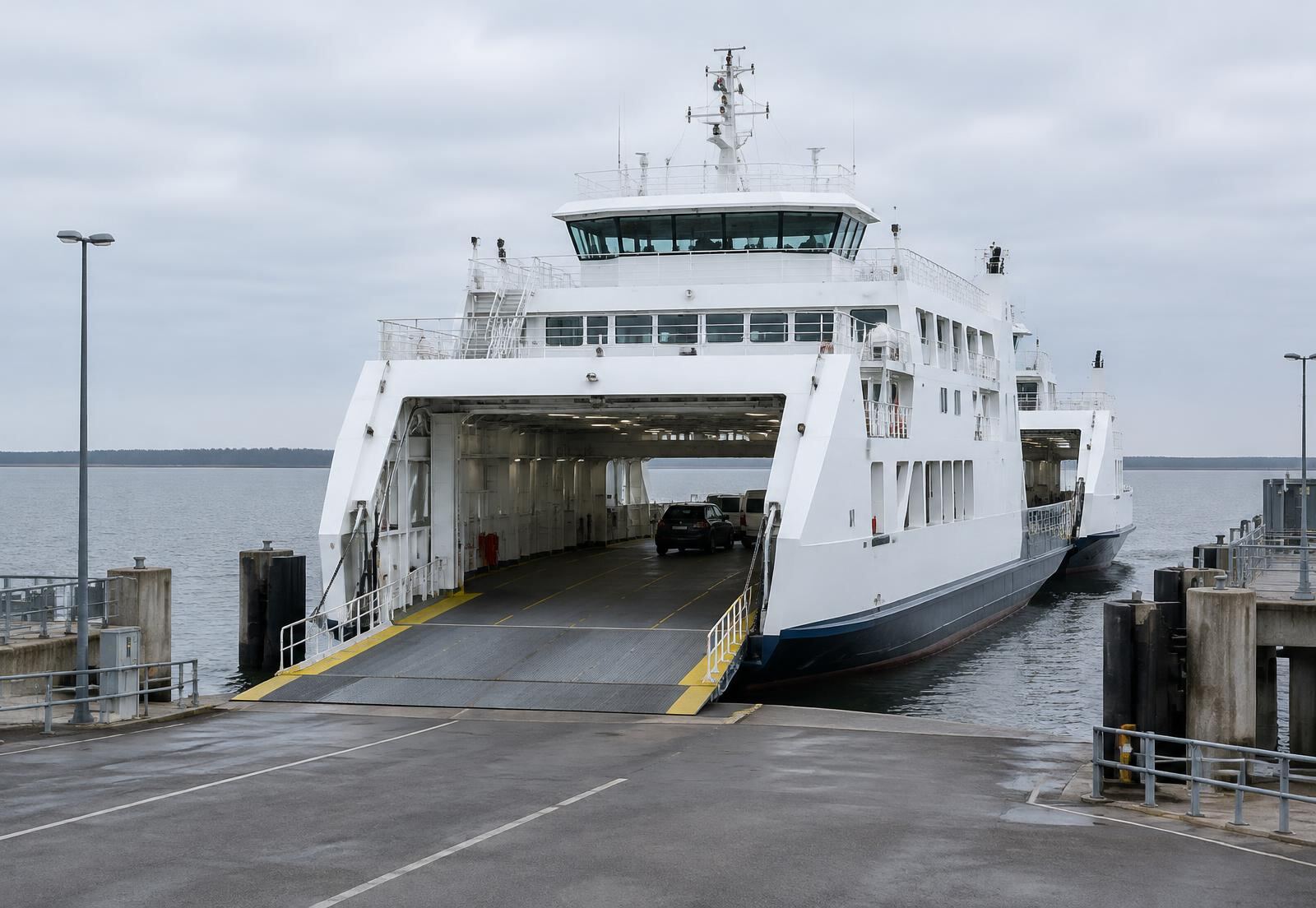
From Historical Ferries to Modern Vessels
The first steam packets carried a handful of passengers and mail. Railway ferries of the twentieth century were long, narrow ships built around their tracks. Today's vessels are designed primarily for road vehicles, with large open decks, rapid loading and spacious passenger lounges.
Modern Car Ferries
- Vehicle decks: drive-through decks for cars, motorhomes, caravans, motorcycles, coaches and lorries.
- Passenger facilities: restaurants, lounges and shops make the crossing part of the journey.
- Loading systems: bow and stern doors with linkspans allow vehicles to drive on and off without turning.
- Safety improvements: international SOLAS rules, stability standards and modern navigation systems.
- Terminal infrastructure: check-in lanes, marshalling areas and direct motorway access.
Whether travellers call it the scandlines car ferry, a vehicle ferry germany denmark, or a motorhome ferry germany denmark, the underlying design principle is the same: move as many vehicles as possible, as quickly and safely as possible.
The Development of Ferry Timetables
Early crossings had no timetable at all. Steamships introduced published departures, and railway ferries tied them to international train schedules. Today a germany denmark ferry timetable shows departures throughout the day, and a germany denmark ferry schedule on the short Fehmarn crossing can feature frequent departures. Anyone looking for a scandlines ferry timetable or scandlines ferry schedule today should rely on the operator's own website, as times change by season.
Modern Germany–Denmark Crossings
Two crossings dominate the germany denmark ferry network. Puttgarden–Rødby is the short link on the Vogelfluglinie, taking about 45 minutes. Rostock–Gedser takes about two hours and serves the Berlin region. For a germany to denmark ferry or a denmark to germany ferry, the choice usually depends on where a journey begins. Every ferry crossing germany denmark today is shaped by more than a century of history.
The Evolution of Ferry Tickets
- Traditional ticket offices: passengers bought paper tickets at the quay or railway station.
- Advance reservations: travel agencies and motoring clubs booked car space ahead of summer holidays.
- Computerised systems: from the late twentieth century, reservation databases managed capacity.
- Online booking: internet sales made self-service reservations the norm.
- Digital travel information: apps, e-tickets and number-plate recognition speed up check-in.
Environmental Technology
Shipping is under pressure to cut emissions. Ferry operators in the western Baltic have invested in hybrid propulsion, combining engines with batteries; in battery-powered ferries for short routes; in energy efficiencythrough hull design and rotor sails; in emission reduction such as scrubbers and cleaner fuels; and in port electrification to charge vessels or supply shore power. Short, frequent crossings are especially suited to electrification.
The Future of Ferry Transportation
Bridges and tunnels have repeatedly reshaped Danish ferry services — the Great Belt fixed link of the 1990s and the Øresund Bridge of 2000 are examples. The planned Fehmarn Belt fixed link will raise the same questions. History suggests ferries adapt: they may serve different traffic, become greener, or complement fixed links rather than disappear.
Current Travel Information
Scandlinec does not sell tickets, display live departures or quote prices. For scandlines ferry times, scandlines ferry departures, prices and operating information, please consult the official operator website listed on this page. Always check directly before travelling.